
Team Improvement
How to Create Accountability Without Blame
Build team accountability through clear commitments, visible ownership, supportive review, and system-focused learning instead of fear and personal blame.
SprintsPlans TeamJul 20, 2026
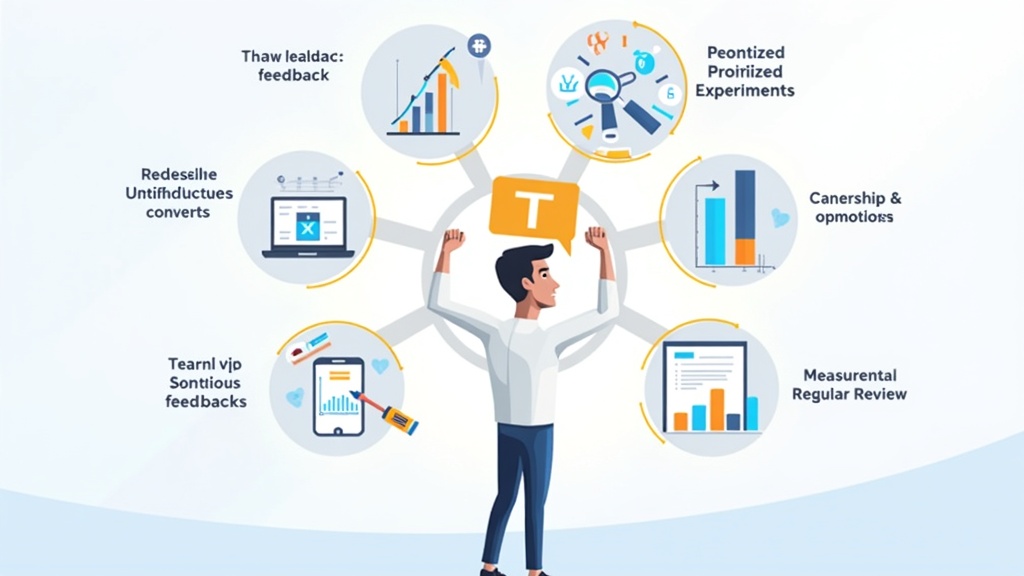
Team improvement becomes sustainable when it is treated as normal work rather than an occasional initiative. Teams often collect improvement ideas but treat them as optional work.
This guide explains the approach in practical terms: what it is, why it is useful, when to use it, how to apply it step by step, and which mistakes to avoid.
A continuous improvement system is a repeatable loop for identifying friction, selecting a small change, testing it, reviewing the evidence, and deciding whether to adopt, adjust, or stop the change.
Teams often collect improvement ideas but treat them as optional work. A system turns improvement into part of delivery. It limits work in progress, makes ownership visible, and prevents the same retrospective issues from returning without response.
Use this system when retrospective actions are forgotten, improvement work competes unsuccessfully with feature delivery, the same blockers recur, or leaders launch large process changes without testing them with teams.
A team wanted faster pull request reviews. Instead of launching a broad quality initiative, it tested a daily reviewer rotation for one sprint. Median review time improved, but the assigned reviewer became overloaded on release days. The team kept the rotation and added a backup rule. The final practice was better because it evolved through evidence.
Yes, when it requires effort. Making it visible helps the team plan capacity and avoid treating improvement as invisible overtime.
Usually one to three work cycles, depending on how quickly meaningful evidence appears.
The whole team contributes, but every active action should have one accountable owner.
Continuous improvement becomes reliable when it has a backlog, limits, owners, and evidence. Prefer a series of small tested changes over a large transformation plan that cannot adapt.
Use SprintsPlans as the front end of your improvement loop: collect feedback, vote on the next experiment, assign ownership, and review the result in the following retro.
Build team accountability through clear commitments, visible ownership, supportive review, and system-focused learning instead of fear and personal blame.
Run team health checks that reveal trends in clarity, workload, trust, quality, and collaboration without reducing team experience to a single score.

Learn the purpose of the Sprint Retrospective, a practical agenda, facilitation best practices, and how to turn reflection into measurable improvement.